

Investing During Market Volatility: What You Should (and Shouldn’t) Do
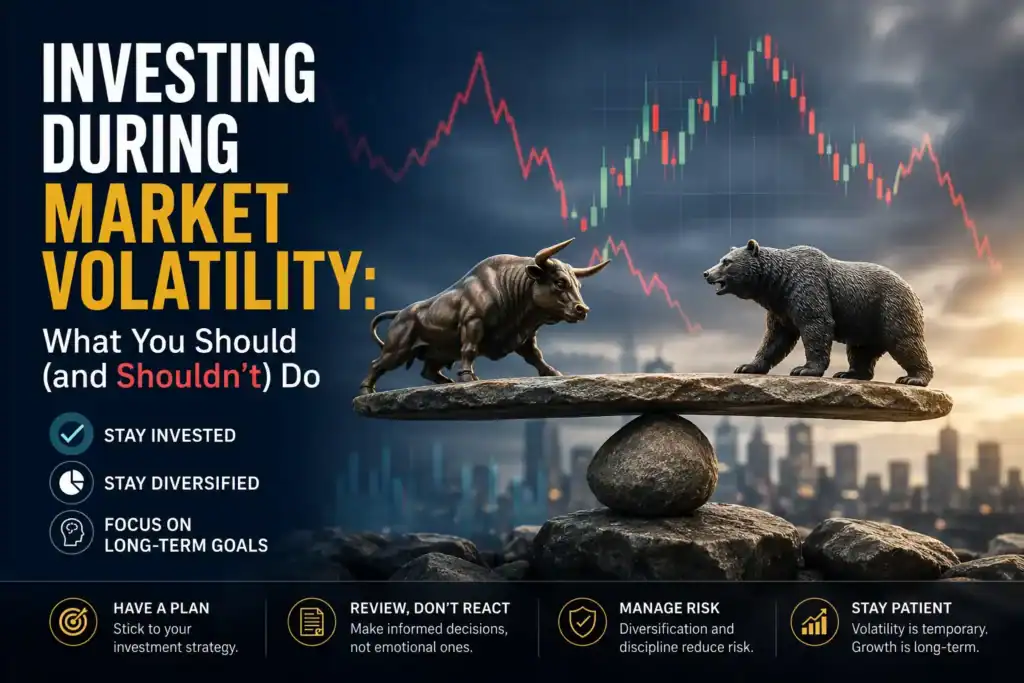
Investing during market volatility can feel uncomfortable, especially when markets experience sudden ups and downs.
It’s natural to question whether you should make changes to your portfolio during uncertain times. However, reacting emotionally to short-term market movements can often do more harm than good.
The reality is that market volatility is a normal part of investing. Understanding how to respond—and knowing what not to do—can help you stay focused on your long-term financial goals. By following proven tips for investing during volatile markets, investors can make more informed decisions and avoid costly mistakes.
What is market volatility?
Market volatility refers to the rate at which investment prices rise or fall over a period of time.
When volatility is high, asset prices tend to fluctuate more significantly—both upward and downward. These price movements are often influenced by factors such as:
- Economic data releases
- Interest rate changes
- Inflation trends
- Global events
- Investor sentiment
- Political and geopolitical uncertainty
For example, rising inflation, central bank policy changes, or geopolitical conflicts can create uncertainty that causes short-term market fluctuations.
While these movements can seem alarming, they are a normal feature of financial markets.
Why do markets become volatile?
Financial markets are forward-looking and quickly react to new information.
When uncertainty increases, investors often become more cautious, leading to temporary declines or increased price fluctuations.
However, it’s important to remember that market movements are frequently driven by short-term sentiment rather than long-term business fundamentals. This is why experienced investors often remain focused on their long-term strategy instead of reacting to daily market news.
Why Do People Avoid Investing During Market Volatility?
One of the most common questions investors ask is, “Why do people avoid investing during market volatility?”
The answer often comes down to emotions rather than investment fundamentals. Many investors hesitate to invest during volatile markets because they fear losing money or believe that waiting until the market “settles down” is the safer option. Others are influenced by negative news headlines, market speculation, or uncertainty about the economy.
However, history has shown that periods of market volatility have often been followed by market recoveries. Investors who remain patient and continue investing according to a well-planned strategy are generally better positioned to benefit from long-term market growth than those who try to predict short-term movements.
Understanding that volatility is temporary can help reduce emotional decision-making and improve long-term investment outcomes.
Tips for Investing During Volatile Markets
While market fluctuations can be unsettling, following proven tips for investing during volatile markets can help you stay focused and make confident financial decisions.
1. Stay Focused on Your Long-Term Strategy
Firstly, remind yourself why you invested in the first place.
If your financial goals, investment timeframe, and risk tolerance haven’t changed, your investment strategy usually shouldn’t either.
Long-term investing has historically rewarded patience over emotional reactions.
2. Stay Invested
Secondly, remaining invested is one of the most important principles of successful investing during market volatility.
Trying to predict when to exit and re-enter the market is extremely difficult—even for experienced investors.
Missing just a handful of the market’s strongest recovery days can significantly reduce your long-term investment returns.
3. Review Your Portfolio—Don’t React
Periods of volatility can be an excellent opportunity to review your portfolio and ensure it still aligns with your financial goals.
However, reviewing your investments is very different from making emotional decisions based on market headlines or daily price movements.
Instead, focus on whether your asset allocation and investment strategy still support your long-term objectives.
4. Maintain Proper Diversification
Diversification becomes even more valuable during uncertain market conditions.
By spreading investments across different asset classes, industries, and geographic regions, you can reduce the impact that any single investment or market event may have on your overall portfolio.
A diversified portfolio can help manage risk while providing opportunities for long-term growth.
What to Avoid During Volatile Markets?
Knowing what not to do is just as important as knowing what you should do.
1. Avoid Panic Selling
Selling investments after markets have already fallen can lock in losses that may otherwise have recovered over time.
Panic selling is often driven by fear rather than sound investment principles.
Remaining patient can help investors benefit when markets eventually recover.
2. Avoid Reacting to Headlines
Financial news often focuses on short-term events and market uncertainty because it attracts attention.
However, constantly monitoring headlines or checking your portfolio every day can increase emotional decision-making.
Instead, rely on your long-term financial plan rather than short-term market noise.
The Importance of Perspective
Throughout history, financial markets have experienced numerous periods of uncertainty, including:
- Economic recessions
- Global conflicts
- Inflation cycles
- Interest rate changes
- Financial crises
Despite these events, markets have continued to grow over the long term.
This is because sustainable investment returns are ultimately driven by:
- Company earnings
- Economic growth
- Innovation
- Business productivity
Short-term volatility rarely changes these long-term fundamentals.
Maintaining perspective during uncertain periods can help investors remain confident and avoid making decisions they may later regret.
Final Thoughts
Investing during market volatility isn’t about avoiding risk—it’s about managing it wisely.
By following practical tips for investing during volatile markets, maintaining a diversified portfolio, and staying focused on your long-term financial goals, you can navigate periods of uncertainty with greater confidence.
If you’d like professional guidance to review your investment strategy or ensure your portfolio is positioned appropriately during changing market conditions, the experienced financial advisers at Leading Advice are here to help. Our team can provide personalised advice to help you stay focused on your long-term objectives, regardless of short-term market fluctuations.
For more financial tips and updates, follow us…
FAQs
Is market volatility a good time to invest?
Yes, market volatility can create opportunities for long-term investors. When quality investments temporarily decline in value, investors may be able to purchase them at lower prices. However, investment decisions should always align with your financial goals, risk tolerance, and investment timeframe rather than short-term market movements.
How long does market volatility usually last?
The duration of market volatility varies depending on the cause. Some periods of volatility last only a few days or weeks, while others may continue for several months. Although no one can predict exactly how long volatility will last, financial markets have historically recovered from periods of uncertainty over the long term.
Should I keep investing when the stock market is falling?
Continuing to invest during a market downturn can be beneficial for long-term investors. Regular investing allows you to purchase investments at different price levels, a strategy known as dollar-cost averaging, which may reduce the impact of short-term market fluctuations over time.
Can market volatility affect my retirement savings?
Yes, short-term market volatility can impact the value of retirement savings invested in financial markets. However, for investors with a long investment horizon, temporary market declines are often part of the normal investment cycle. Staying focused on long-term retirement goals is generally more important than reacting to short-term market movements.
Should I speak to a financial adviser during periods of market volatility?
Yes, periods of market uncertainty can be a good time to review your investment strategy with a qualified financial adviser. An adviser can assess whether your portfolio remains aligned with your financial goals, risk tolerance, and changing personal circumstances, helping you make informed decisions rather than emotional ones.